A World of Imagination
By Neil Pond
Adrien Broom doesn’t just take pictures. She makes pictures.
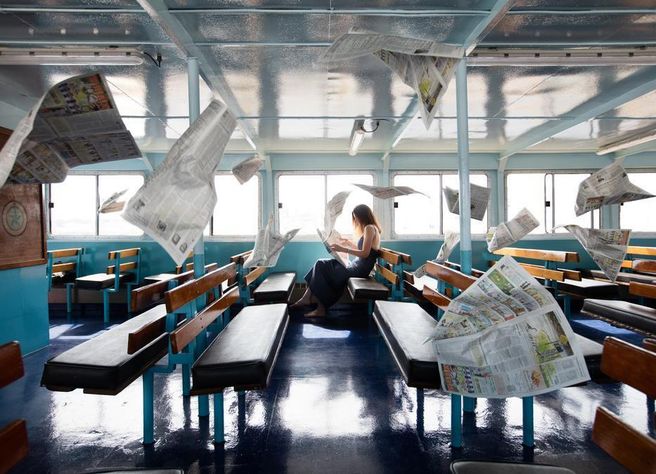
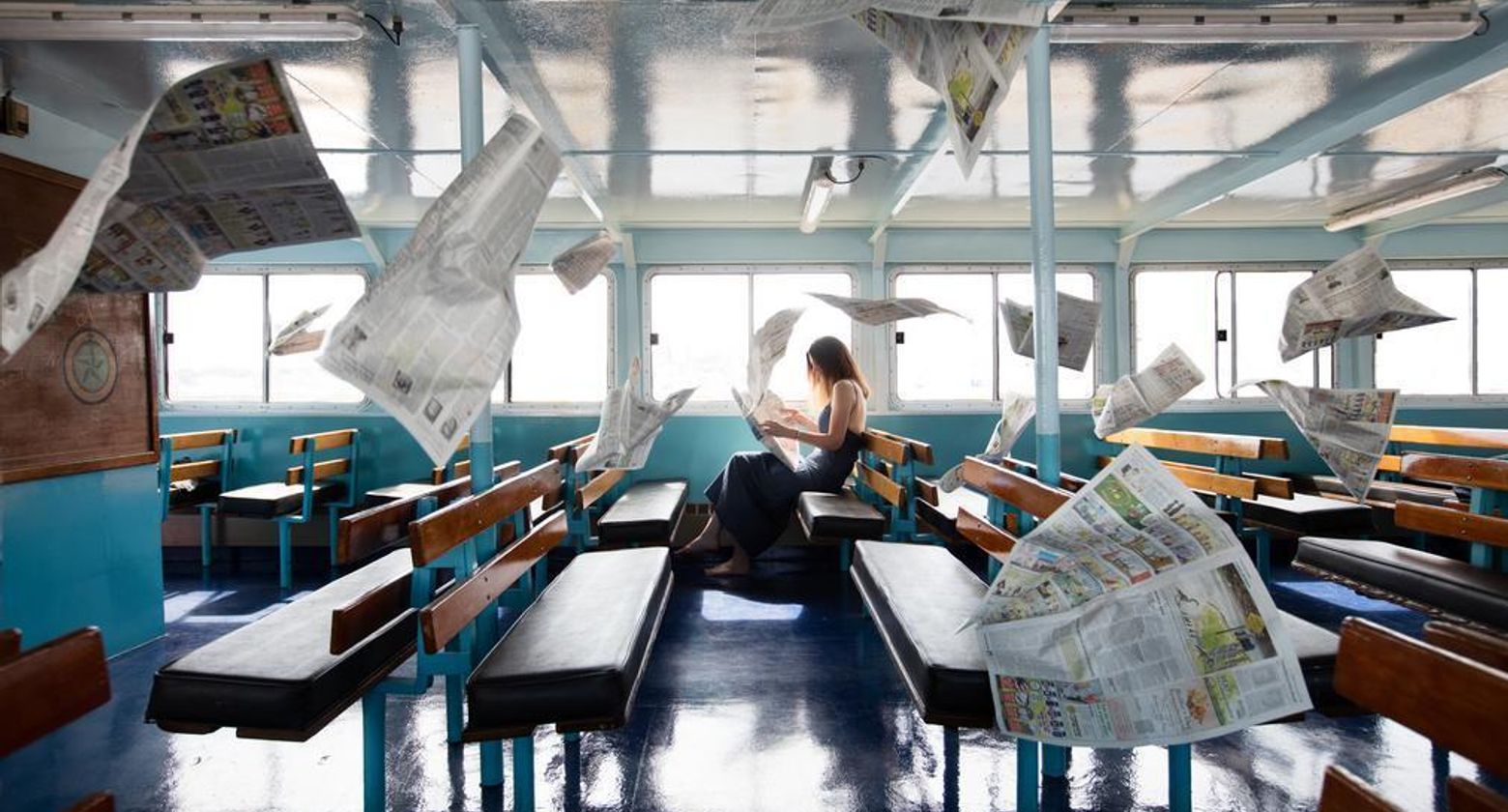
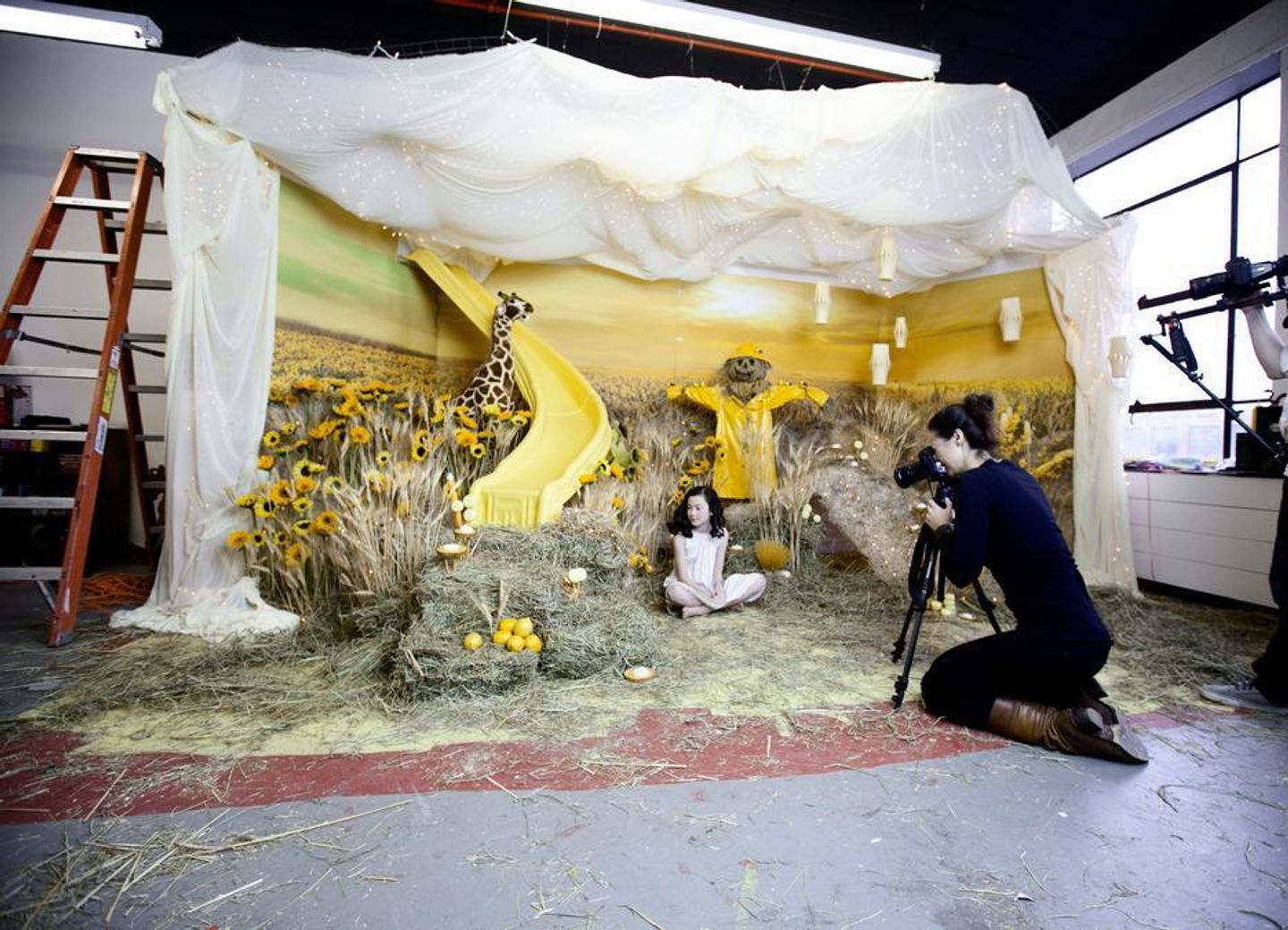
The Brewster Class of ’98 alum is a fine-art photographer and multimedia artist who builds elaborate surrealist tableaus for her portraiture subjects. “I like to create worlds that don’t exist, and provide a little bit of escapism,” says Broom. “The bizarre/beautiful combination is what I’m going for. That’s what speaks to me.”
Her photos—which have been exhibited in galleries and museums around the world—are windows into fantastical realms inviting viewers to come inside, look around, pore over details and ponder what they’re seeing. Why is that young woman on a settee with a fox? What about that giant tortoise, the squid reading a book, or the little girl walking across a forest floor softly aglow with lamps?
“I enjoy hearing what people think, from all the different puzzle pieces,” she says.
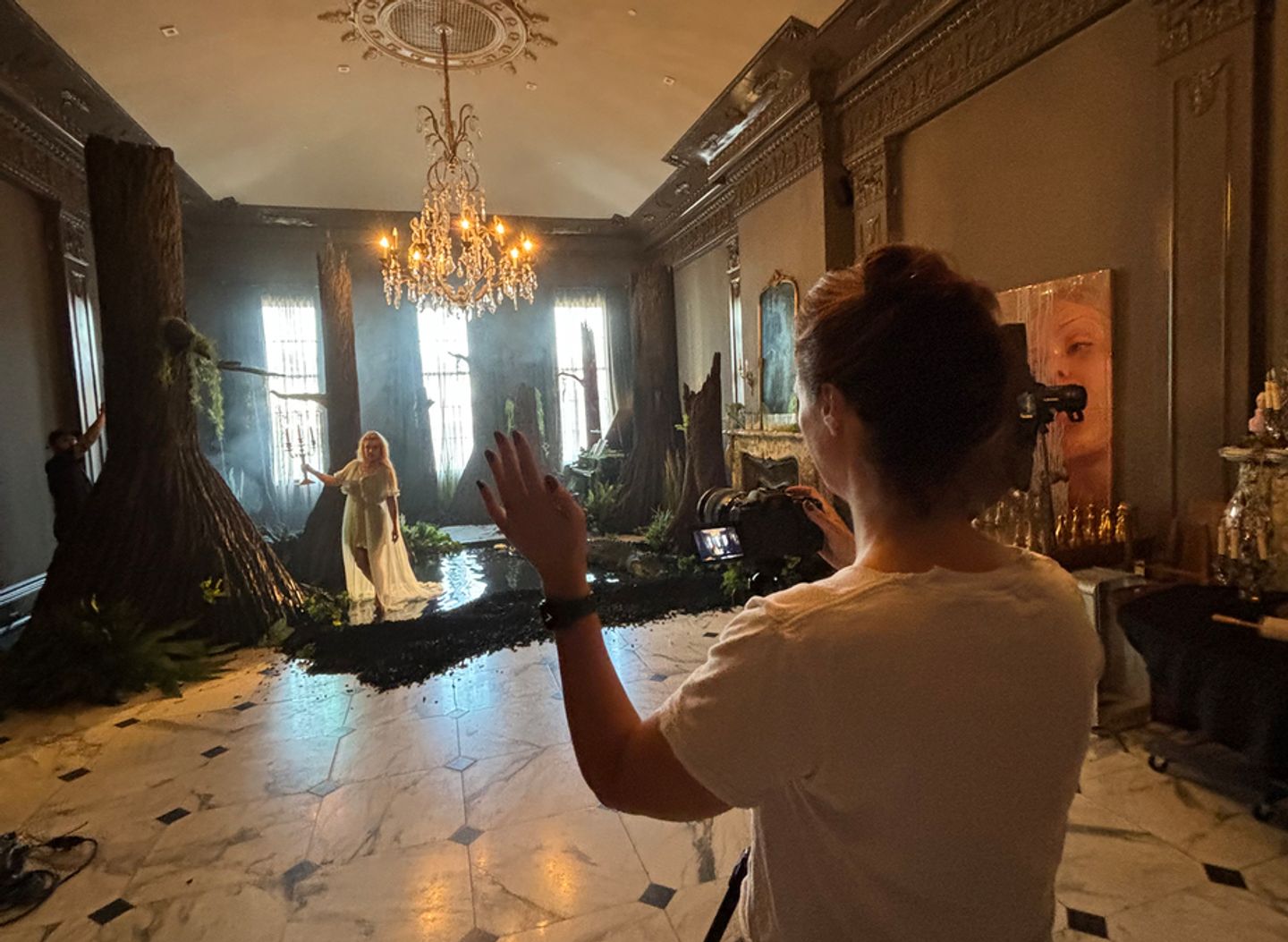
Her photography draws heavily on connecting viewers to childhood imagination, with enchanted forests, animals, myths and fairytales, suffused and seasoned with whimsy. But even with a veneer of the unusual, everything Broom composes for the camera is real—real people, real props, real things, no digital effects, no AI fakery. “I find joy and connection and inspiration in physical, hands-on work,” she says. Some of her setups can take months to plan and execute, and even stretch across years.
Many of her photos feature young girls, which Broom admits are often avatars for her own childhood, filled with discovery and wonder. Her acclaimed exhibit A Colorful Dream is currently wrapping up a six-year tour of museums and cultural institutions throughout America. “I’m really proud of that,” she says. Broom built the elaborate sets for each part of the exhibit’s story, each using specific colors for objects and materials to depict a young girl growing up in multi-hued dream worlds.
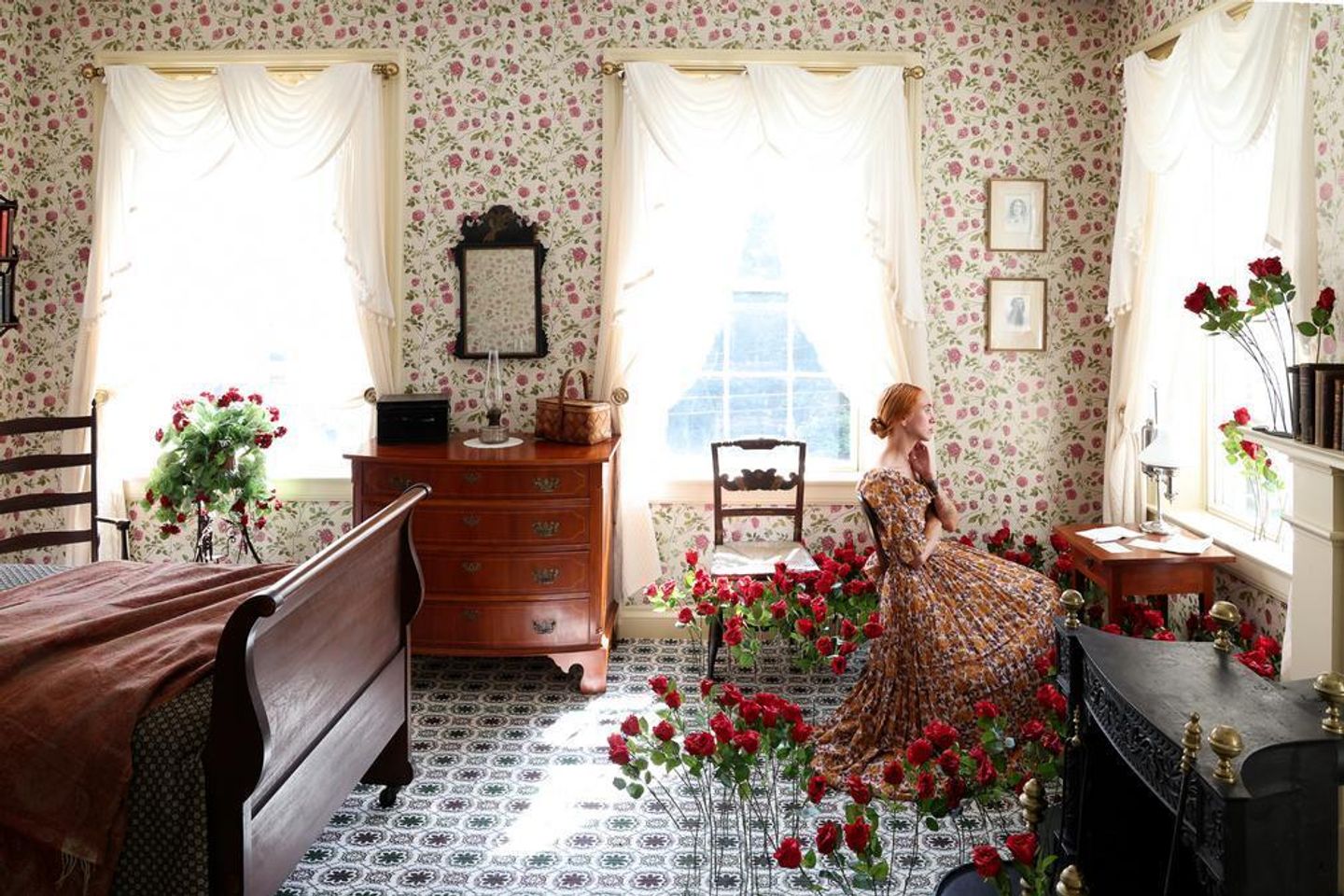
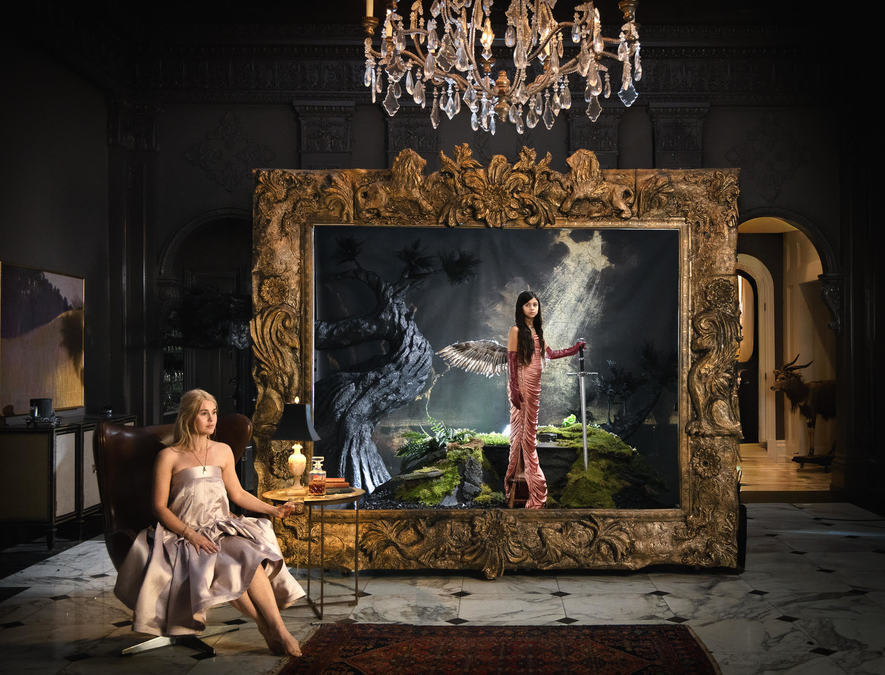
It all started for Broom, colorfully enough, in the small town of Lyme, Conn., a place with a rich history of creativity. “America’s first art colony was in Old Lyme,” she notes. Her father, a hobbyist photographer, owned a construction business and restored old houses, which Broom says inspired her recent Holding Space: The Historic Homes of Artists and Writers. That exhibition was a series of narrative images, staged to summon the mojo of creatives—like Mark Twain, Emily Dickinson and Jackson Pollock—where they once breathed, lived and worked. “The love for the feel of these old spaces is kind of ingrained in my DNA,” she says. That exhibit is currently on display at the Mark Twain Museum in Hartford, Conn., and will be going on tour in 2027.
“I was very lucky,” she adds. “My parents really encouraged the arts as a very important part of my childhood and dive into that part of myself.”
There was another reason, too, that she gravitated more toward drawing, coloring and making things. She had a mild case of dyslexia, which caused some struggle with reading and language. “But anything visual, where I could express myself, it was like cutting butter,” she says. “It was just so natural and so rewarding.”
At Brewster, she remembers how much the school stoked her love of the arts. “A lot of kids were really into music and drawing and painting,” she says. “It gave me confidence.” She also played basketball and tennis. “I loved my tennis coach, Mr. Martin,” she says, recalling how he showed support for her after she ran temporarily afoul of Brewster’s code of conduct. “He said, ‘She’s a good kid. She’s a hard worker. She deserves a second chance.’ That was a super life-changing point in my life, having an adult stand up for me like that.”
Another thing she remembers from her Brewster years was the cultural diversity of being around students from all over the world. “It was wonderful being a teenager from a little woodsy town,” she says, “and making friends who grew up completely different from me. That’s carried on throughout my life.” She met her longtime best friend, Katherine Zeitz, at Brewster and visits her each year at her home in Germany. Two of her other Brewster besties, Jill Krumsick and Jill Popovich, made the trek last spring for Broom’s exhibit when it opened at the Fred Jones Jr. Museum of Art at the University of Oklahoma.
After graduating, she went on to get a degree in computer animation and art history from Northeastern University and study art in Florence, Italy, and London. “Living and working in Europe,” she says, “changed my life and my art.” But soon she felt her life derailing. “I had a horrific breakup in my late 20s. I was totally heartbroken. I lost a job and ended up moving back home trying to figure out who I am and what I’m doing.”
Then some of her friends threw her a lifeline. “They were in a band, and they were like, ‘Adrien, you’re a hot mess. We’ve got to get you out of the house.'” They took her on the road as their photographer. And that’s how she spent a decade, off and on, traveling with the band.
In 2014, she published a book of her pics, Inside Looking Out: On the Road with Grace Potter and the Nocturnals, a collection of portraits and snapshots of the Vermont-based group performing, hanging backstage, on the bus, with fans and just goofing around. “Photography saved me,” she says. “For the first time, I felt joy. I didn’t really realize how unhappy I was until I picked up the camera. Capturing those moments fed my soul.”
In between trips with the Nocturnals, she’d come home and experiment with other types of photography. She’d set up more formalized, orderly environments for her pictures, creating visual narratives and honing what would become her artistic “signature” of telling stories with dioramas. That’s when it all came together, the realization that at last, she’d arrived in the sweet spot she’d been seeking.
“It’s almost like being in a romantic relationship,” she says. “Suddenly, you find a good match, and you’re like, ‘Oh, this is what it’s supposed to be like.’ That’s what I felt like when I started heading down this path. Now it’s clicking. Now I’ve found my way.”
These days, Broom’s way often leads to Guilford, Conn., and her home “in the middle of the woods” that she shares with her husband of three years, musician Nico Chiotellis. “He was in bands for a long time in L.A. and New York, and then kind of pivoted to producing,” she says. They also have a place in Brooklyn Heights, a historic New York neighborhood. “I hop back and forth.”
As she talks, Broom is in Guilford, settled into a chair and watching the weather. “It’s a cozy, rainy day,” she says. Like her childhood home in Lyme, she’s surrounded by woodland; she calls her office “the tree house” because that’s all she sees when she looks out the windows. “It makes me really happy,” she says. “It makes me feel like I’m inside one of my photographs. Even when it’s dreary and rainy and gross, it’s still magical.”
Magic plays a big part in what she does, how she does it, and why she does it. “Magic has become such a blanket term for all sorts of things,” she says. “But I feel like there’s a magic in our world that we can’t really explain.” Sometimes it’s something beautiful, or sublime, or beyond words, that reawakens a sense of appreciation and awe. “I try to recreate it in my work, to tap into it.”
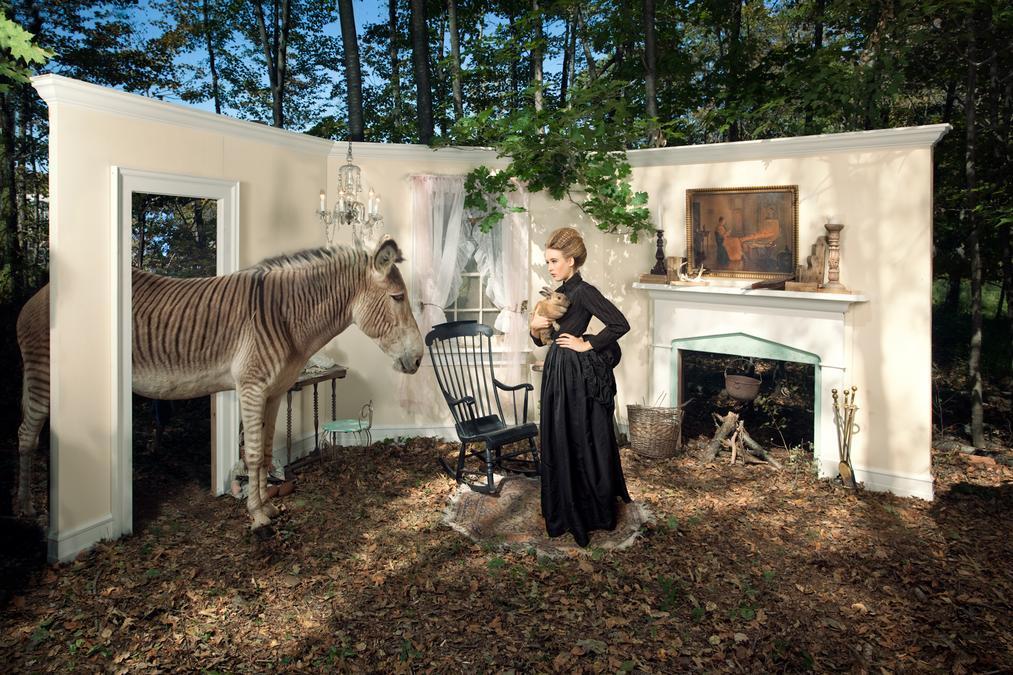
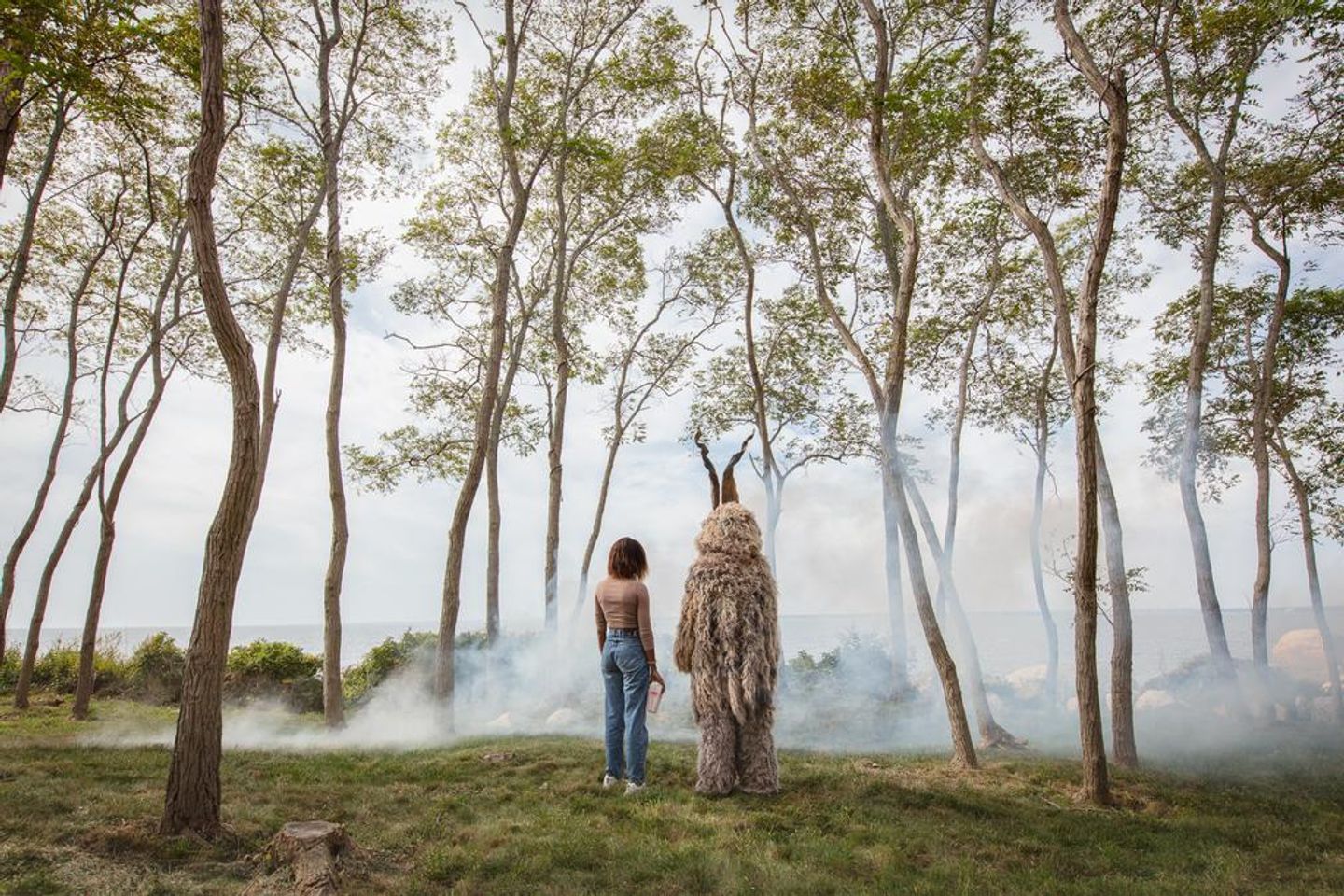
She’s always found magic in the trees, in the forest. Leaves and bark and towers of greenery have been lifelong sources of fascination and inspiration. Her recent exhibit Mystical Murmurs at the Florence Griswold Museum in Lyme was “all about the mystery of the woods,” she says, and the centuries of folklore, superstition and fairytales rooted there.
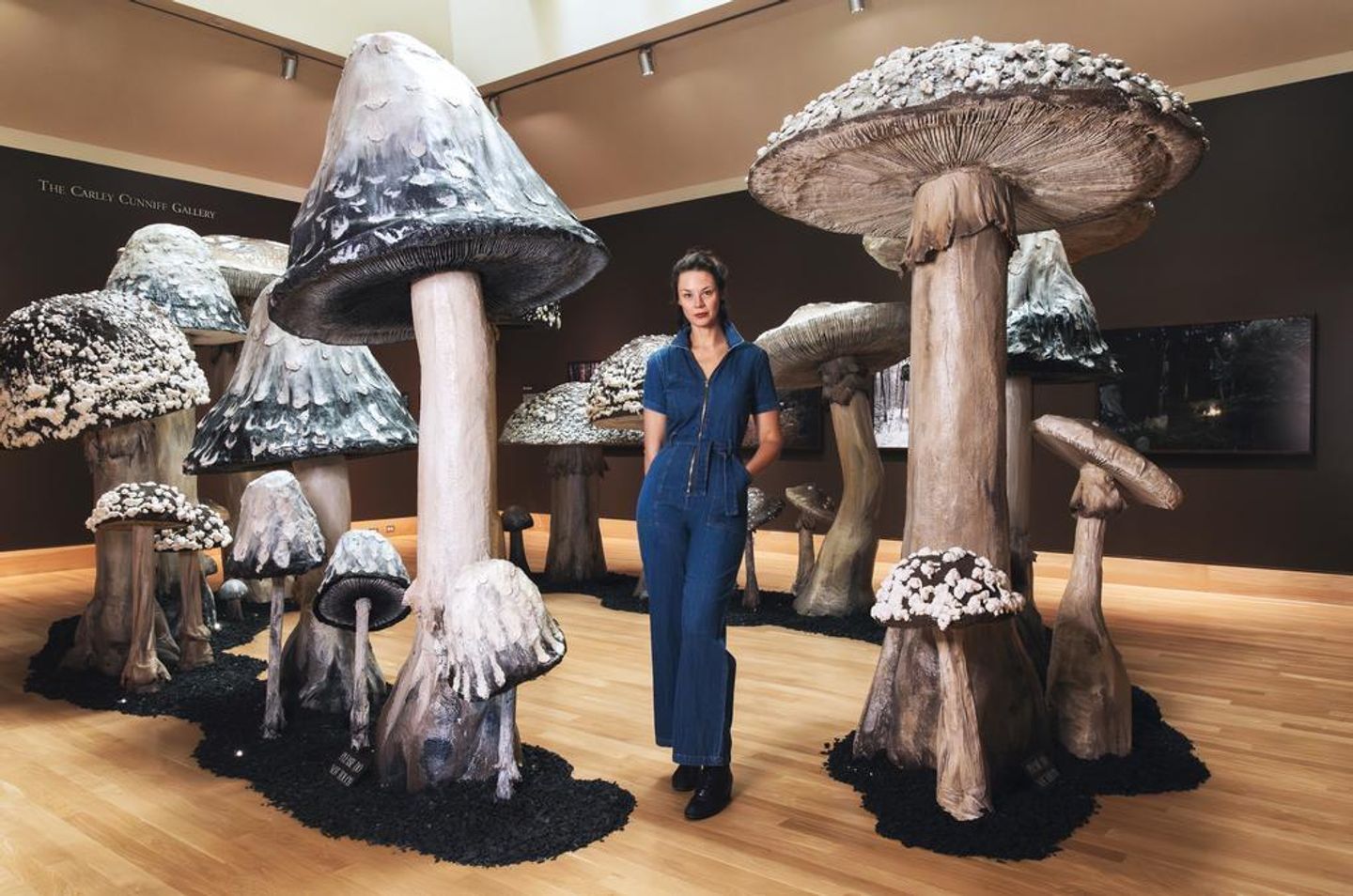
For that project, she collaborated with husband Nico on an audiovisual set that involved the creation of a “larger-than-life faerie ring,” a circle of oversized sculpted mushrooms and motion-activated music. “You step inside the circle and hear the faeries’ music. It was hypnotic and beautiful.” She’s been in talks about doing a similar exhibit at the Salvador Dali Museum, in St. Petersburg, Fla., the world-famous showcase of the late Spanish surrealist painter. “I’m excited to explore the folklore of the Florida swamps,” she says, “and create something more local for the museum.”
Broom says her photography consistently circles “back to an appreciation of the natural world that surrounds us.” Another of her projects, 2019’s Farm-to-Camera, asked viewers to look at Mother Nature’s bounty through photos of garden vegetables positioned in elegant picture frames.
She continues to look toward Mother Nature. “There are a lot of animals that have become very comfortable with just coming up to the house,” she says of watching the wildlife at Guilford. She loves the “otherworldly” howls of coyotes at night. Deer wandering through the property made it into her Mystical Murmurs project.
Her to-do list includes venturing deeper into filmmaking. “I would love to make my stories ‘move’,” she says. She’s already been shooting short videos to incorporate into her exhibits. One of them, for the project she titled Being, featured her younger sister wandering around at night inside Wentworth Woodhouse, England’s sprawling private home, wearing a luminescent dress with more than a thousand tiny LED lights hand-sewn into it.
There are challenges to doing what she does. But she meets them with perseverance and resilience. “I throw my whole body and soul and bank account into making this work. Sometimes it doesn’t, and you just try again. Funding for an artist is something I think every artist is always trying to figure out.” She raises money for her projects through Kickstarter campaigns, doing occasional corporate work (like her projects for Disney, Rolex and American Express) and commissioned private portraiture.
“For a long time in your career, you hit a bump and you’re like, Well, that’s the end. After a while you realize they’re just bumps, and you keep going. I’m proud of myself that I’ve been able to do that, take the failures and learn from them.”
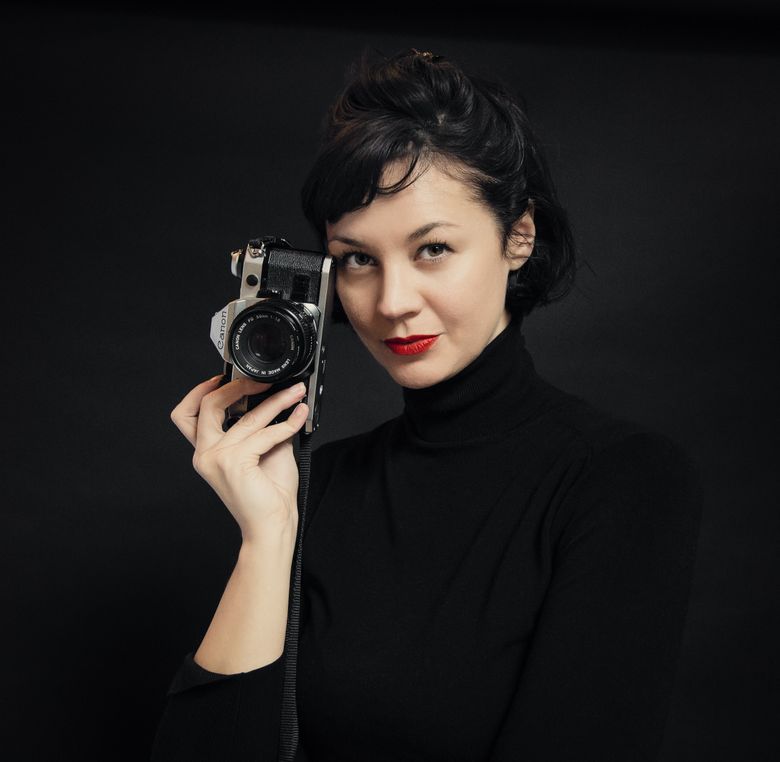
The ultimate reward, she says, is feeding her appetite for creativity, nourishing her artistic vision, sharing it with others, and relishing that she’s where she wants to be in the world—and in the fantasy worlds she makes for her camera.
“I don’t think,” she says, “there’s anything else I want to do.”
___
This story is featured in the Fall 2026 edition of Brewster, The Magazine. Read more stories, explore campus news, and catch up with the Brewster community in the full issue.