Meet the Faculty: Jen Dumont
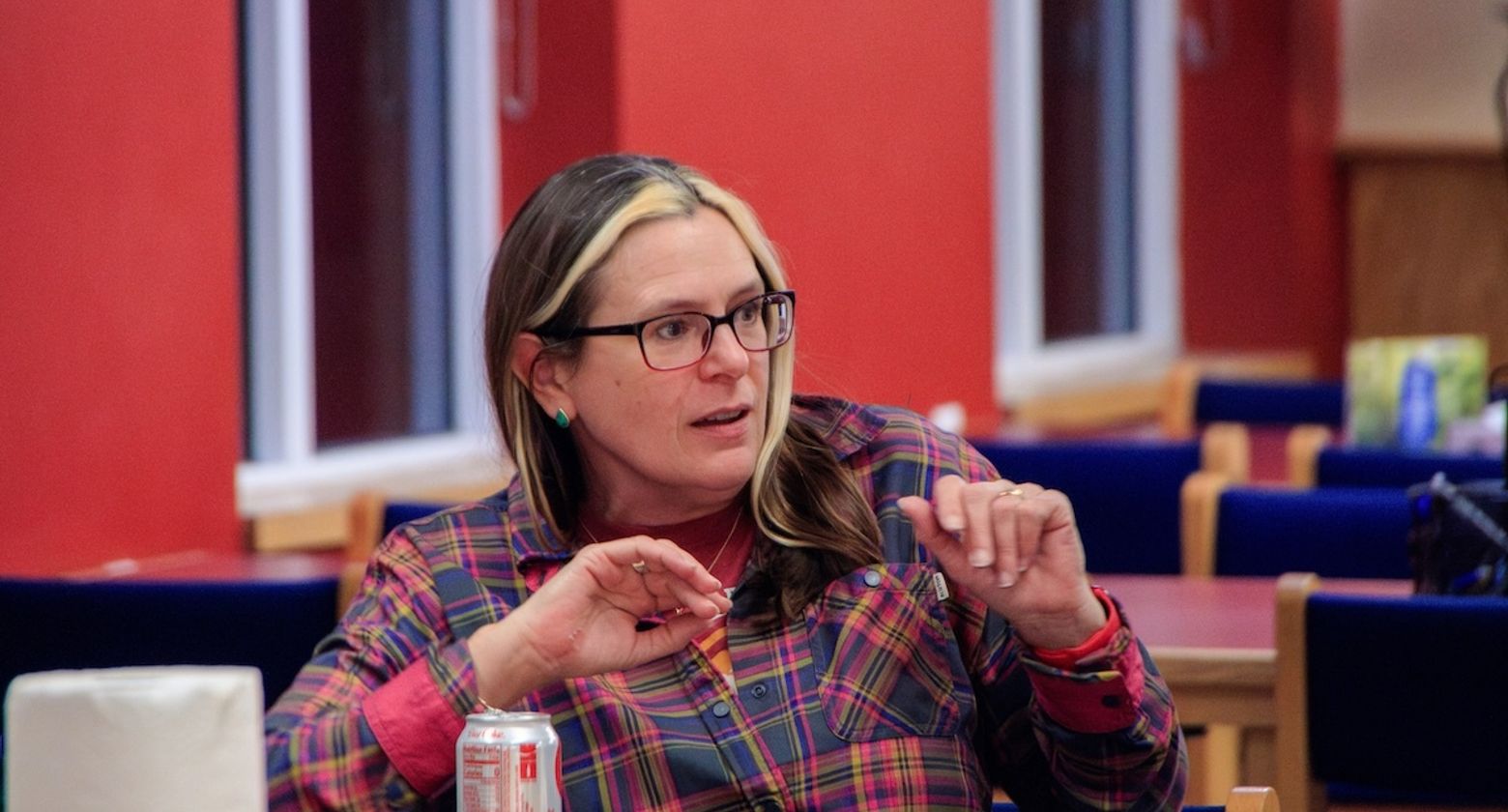
By Suzanne Morrissey
You could say that Jen Dumont is an educational shape shifter, expertly so. With her BS in Journalism from Boston University’s noted College of Communication, she first came to Brewster in 1997 to teach journalism and serve as the advisor to the student newspaper, yearbook, and literary magazine. She left in 2000 to pursue graduate studies, and after earning her Masters in English Education from Plymouth State University she taught at the high school and college levels before returning to Brewster in 2012 as an Instructional Support teacher. A year later, Ms. Dumont joined the English faculty, continuing her previous role as the advisor to student publications. Then, after more than two decades in the classroom she embarked on a new career track as the Director of the Kenison Library, a change she describes as “thrilling.” We asked this faculty/staff member and Brewster parent—who just added another advanced degree to her CV—a few questions about her professional life (and learned what her favorite restaurant is along the way!).
Q. First, congratulations on your recent completion of the MLIS from Simmons University, with a concentration in Archives Management! Why did you pursue this degree?
A. Thank you! As a teacher who believes in lifelong learning, I embraced my return to the classroom in the role of student. We tend to forget how difficult it can be to be in a student role, so I appreciated returning to that perspective. Library Science dovetails nicely with my first degree and profession, which was Journalism. Intellectual freedom, research, and free access to information are at the heart of both of these professions, and I realized that in many ways I was not just continuing my work as an educator in the library, but I could also continue to champion intellectual freedom and to teach students about how information and knowledge is not just power but also a key element of living and participating in a democracy.
I decided to pursue an Archives Management concentration to support me in my work with Brewster’s archives. I figured I didn’t need to do a school librarian track—I have an M.Ed., so I have the education piece covered. So I wanted to diversify and also study something that could bring as much benefit to my role at Brewster as possible.
Q. For people who don't know, can you describe the current state of the Brewster archives?
A. Well, it’s fair to say that the Archives are in a state of flux. The collection includes many photographs, in many formats, going back decades and including some old plate photography, which is incredibly sharp and high quality. There is all kinds of paperwork including diplomas, notes from past administrations, the papers of faculty members, and correspondence, among other things. There is some audio and visual material such as past dramatic performances and recorded interviews with community members. After Shirley Richardson passed, her family kindly donated all of her and her husband Robert’s papers and files to the archives, which include the research material and recorded interviews that they collected in order to write their book, The History of Brewster. We also have some textiles, including old jerseys, Brewster sweaters, quilts, and wall hangings. Finally, we have a collection of books that once belonged to William Brewster, the son of our founder John Brewster. William was a world-famous ornithologist and his collection of taxidermied birds is held at Harvard, where he taught. But in his will he stipulated that, while his birds would go to Harvard, his books should go to Brewster.
Q. Wow, that is a lot to catalog and sort. What are your hopes/dreams for the archives moving forward?
A. Gosh, mostly to get everything under control and organized. And then look at how we can create some displays down the road.
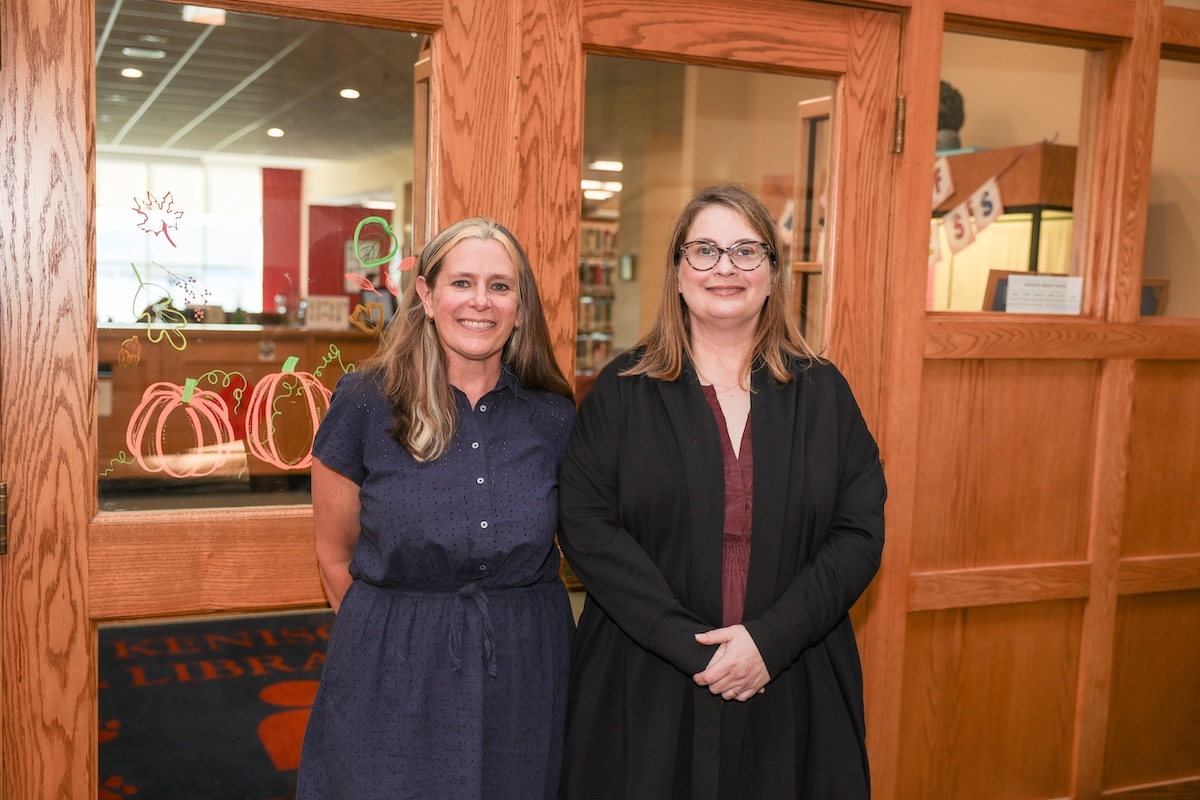
Q. You clearly love being the director of the Kenison Library...you and Laura June Raymond keep the atmosphere warm, welcoming, and creative. What changes have you implemented since you took over the role?
A. Oh gosh, we’ve worked so hard and changed so much. First of all, thank you for saying it is warm and welcoming because that was my biggest initial goal.
Q. Well you’ve succeeded on that front! When did you start in the library?
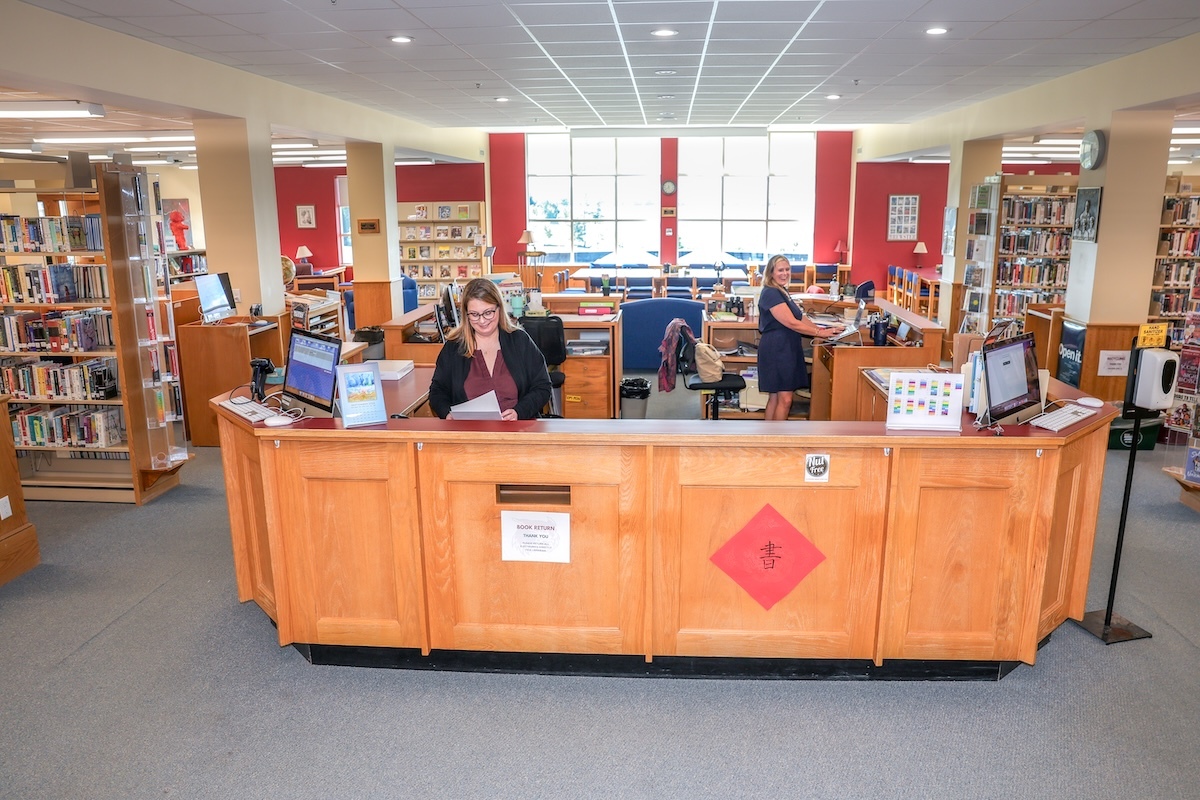
A. It was 2021, and before we took over that fall, the library had undergone a few renovations and changes. It was a popular place for students to hang out, and I wanted it to remain so, but also to revitalize it as a communal, academic, and maybe even artistic space. As an English teacher, I incorporated art and creative process into my teaching, so I wanted to bring this with me into the library. So the first thing I did was to hang as much art as I could get my hands on. I brought several pieces with me from my classroom walls that students had created. I found a few beautiful wall hangings around campus that were not needed, and I had a couple of prints that I owned framed and hung in key spots. Laura June has a background in art, which was a perfect fit, so we created an artistic makerspace with supplies including paints, markers, crayons, glitter glue, hole punches, card stock, etc. You name it, we (hopefully) have it! I also bought some comfy furniture, and re-arranged the space so that the view of the lake was visible from all parts of the library.
Finally, Laura June and I make sure to greet everyone warmly and do our best to support people with whatever they need. I always say to people—you can always come in here and ask us anything, from what class is it right now, to where is the bathroom, to I need to find this book, to can you help me figure out how to register to vote? All questions are welcome and we will do our best to answer them!
Q. How do you think our students most use Kenison now and how are they most benefiting from the library services offered?
A. We definitely do check out a lot of books, so students are reading. But probably one of the biggest benefits for students is the exposure to research techniques and resources that they receive when they visit the library for research instruction. We provide access to almost 40 online databases and encyclopedias, and I teach them how to navigate these resources to find information. I also teach them how to properly cite these resources, and to build accurate bibliographies. This is the same kind of research and citation work they will be expected to perform in college, so they are being prepared for college-level classes, starting in the 9th grade.
Q. You won Brewster’s Kenison Award for Excellence in Teaching in 2017 and have taught in the public and private sectors of education. What do you think makes great teaching last and what do you bring from your teaching days to your library work?
A. The qualities of a great teacher have been unchanged for centuries. A great teacher listens to their students, treats them with respect, speaks to them with kindness and understanding, tries to put themselves in the shoes of their students, and meets them where they are at. As a teacher, my students would often report that they felt safe, seen and respected in my classroom. I strive to bring that same level of respect, kindness and understanding to the library.
Q. If you could curate a “Kenison Essentials” shelf—five books every Brewster student should read before graduation—what would make the list, and why?
A.
1. Yellowface by RF Kuang: The ultimate mean girl novel that also dabbles in racial appropriation and explores plagiarism. Biting, sarcastic, funny, and a great read!
2. And Then There Were None by Agatha Christie: the original mystery thriller that pretty much every other mystery novel and/or movie is based on. This classic still gives me chills.
3. The Haunting of Hill House by Shirley Jackson: similar to #2, the original haunted house story and another classic that is impossible to put down and absolutely terrifying.
4. Something by Stephen King because he’s an American master and can tell a story like no other. He turns people onto reading, and I’ve witnessed many students finally take up reading because they read something by Stephen. (I am a lifelong fan and a Constant Reader, as he addresses his fans, so I feel that I can refer to him by his first name.)
5. To Kill A Mockingbird by Harper Lee: an American classic that explores racism, justice, friendship, desire, love and many aspects of American culture, both negative and positive. So well written that it’s a breeze to read. Everyone can identify with Scout’s observations because we were all children once, and this novel captures childhood so vividly.
Q. Can you tell us more about your role as the journalism advisor at Brewster? What lessons from journalism most apply to students in today’s information-saturated world?
A. I am the faculty advisor to our newspaper, The Brewster Browser and our literary magazine, Outcroppings. I have been serving in these roles since 2012, and also briefly during my first time around at Brewster from 1997-2000. These two publications are so important and I strive to make them relatable to students even in this digital age. It’s so valuable for students to understand the process that reporters use to gather evidence and material, interview community members, and to craft a story from a news event. The students who are involved in Journalism come away with a high level of media literacy, through creating a publication that they can hold in their hands and see online as well. They learn how to write journalistically, and they also learn how to lay out their stories using graphic design. Anyone who is considering a career in communications or the arts can benefit from being a part of these publications.
Q. Talk about wearing many hats! You’re also the National Honor Society advisor for the John Brewster chapter, and teaching the AP Research course, helping students dig into complex topics. Can you tell us more about that course?
A. Students in AP Research spend the entire school year working on a research project that culminates in the composition of a major research paper which includes a literature review, a research method and study, results from their study, and a conclusion in which they decide whether they have proven their hypothesis. It’s an incredible accomplishment and the work provides students not only with college-level research experience, but also helps them to learn how to propose a major project, get it approved, and then to manage their time while executing it. This is my first year teaching this class, and students are pursuing projects that involve math tutoring, working with therapy dogs, understanding poetry that has been translated from other languages into English, and exploring how “fast fashion” companies could improve their images through ethical marketing. It’s been a challenge to respond to and guide these students as they are each pursuing such wildly different topics, but in many ways it’s a similar process to guiding students through writing their stories for the newspaper. So it was a natural fit, and I’ve been enjoying it!
Q. We know you spend your free time enjoying cooking, camping, and reading by the lake. With your sons Henry ’22 and William ’25 both at college in Boston, what’s your perfect Wolfeboro weekend as an empty nester?
A. Well if it’s a B weekend, I like to sleep in to recuperate from this crazy Brewster life. I also like to squeeze in a long walk with my dog Maggie down the beautiful Bridge-Falls Path, no matter the weather. Then maybe dinner with my husband at our favorite restaurant, O Bistro, and of course some time by the lake to catch a gorgeous sunset or perhaps to do a little kayaking during nice weather.