The Guide That Demands Deeper Connection
By Kara McDuffee
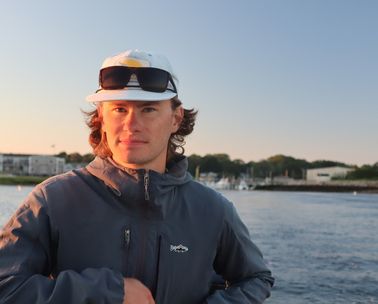
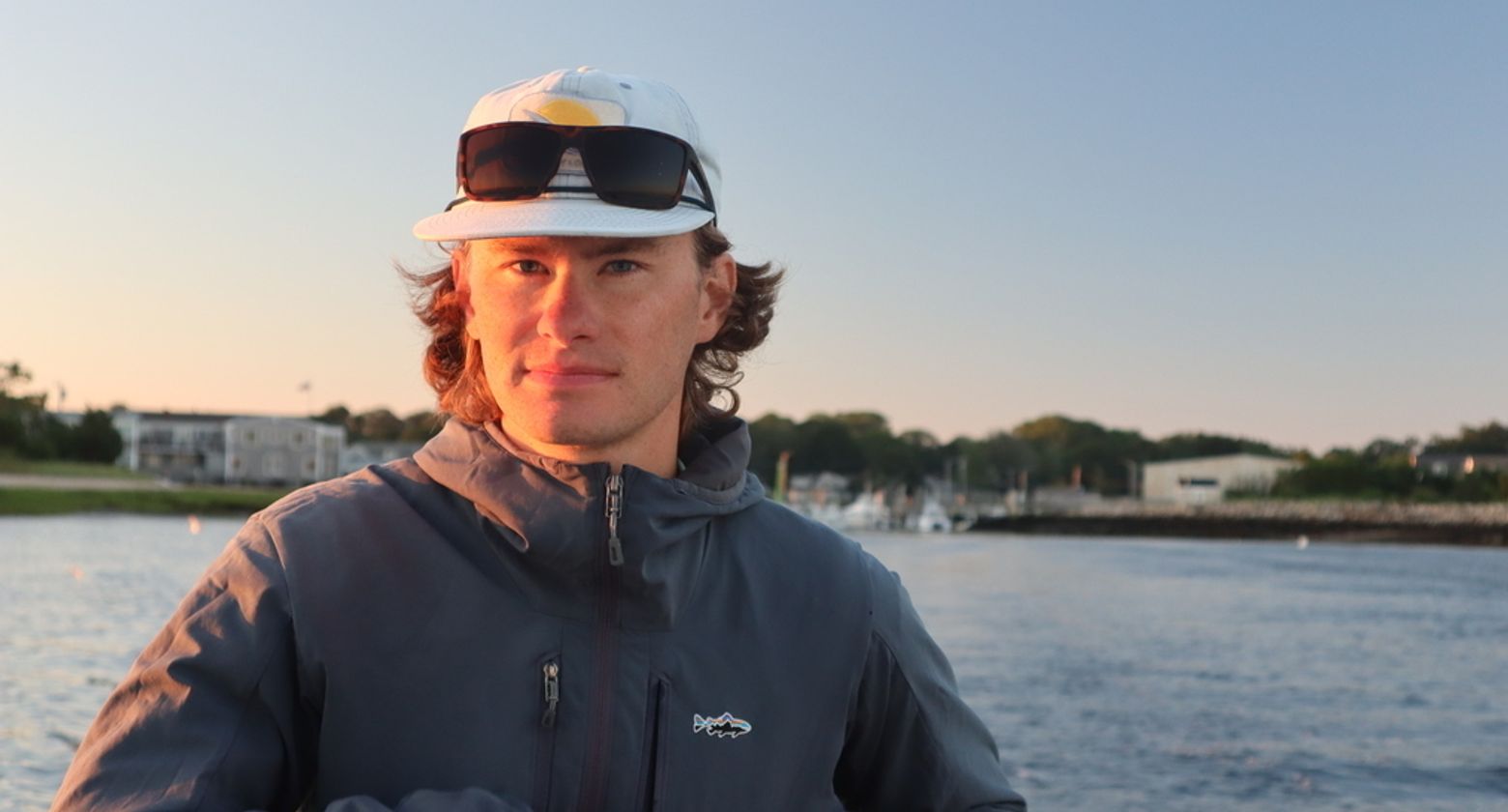
Kevin LaCroix '15 came to Brewster for hockey. He left with something that would quietly redirect his whole life.
In the spring of his senior year at Brewster, Kevin LaCroix ’15 picked up a fly rod for the first time.
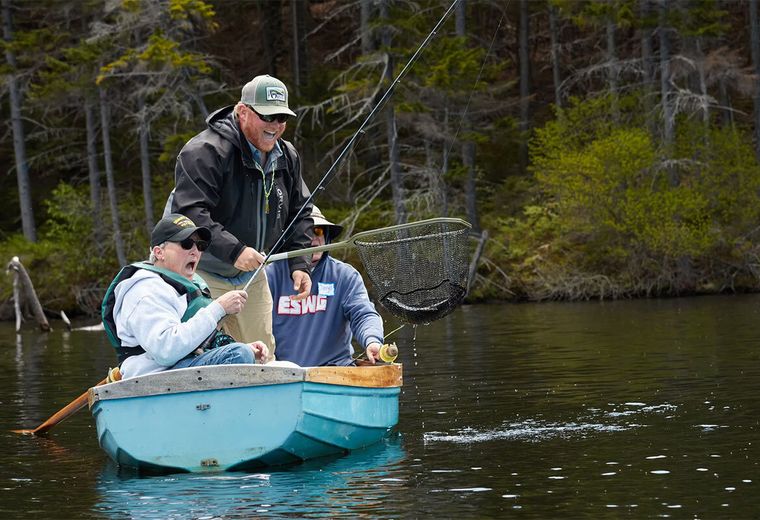
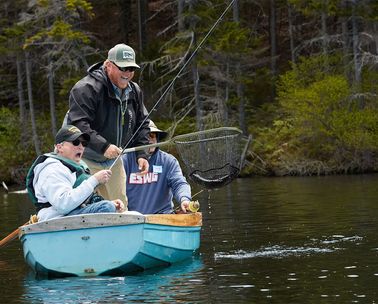
It belonged to the father of a Brewster friend, a fixture of Wolfeboro, who had spent his career product-testing outdoor gear and had built his whole life around what he loved. The mentor showed LaCroix the basics, and something took. For a kid who had grown up on boats off Cape Cod, it was less a discovery than a homecoming, the water he knew best handed back to him in a new form. "A relationship I met through Brewster completely changed my life," LaCroix says.
A decade later, the first person to put a fly rod into his hands is still the first person to book dates on LaCroix's guiding calendar every year.
A Hockey Player First
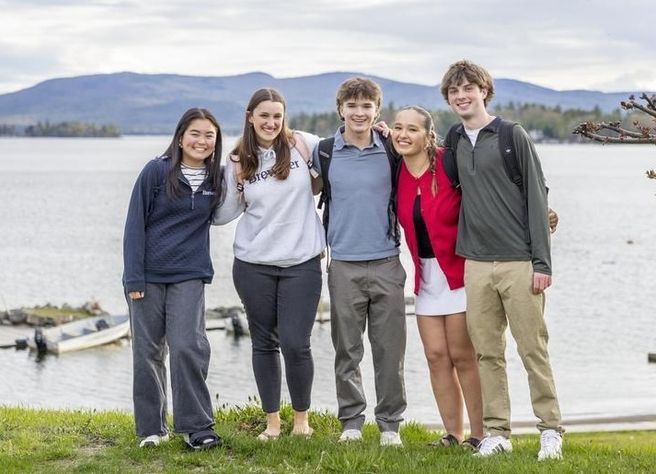
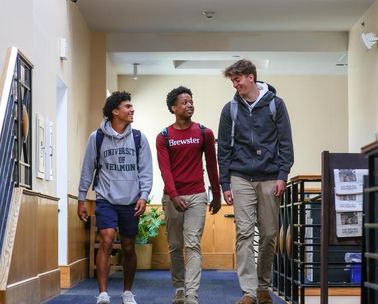
LaCroix arrived at Brewster in 2013 with one plan, and it was not fishing. "Never would I have been able to go to Brewster if it weren't for hockey," he says. But what he found in Wolfeboro reached well beyond the rink. He still talks about the mood meter, the daily check-in that asked every student to stop and name what they were feeling. It seemed like a small thing at the time. It does not seem small now, a decade into a career built on reading conditions, reading clients, and knowing when to call a day off. "Things like that, where Brewster was focusing on emotional intelligence, was just far beyond anything that anybody was teaching," he says. "So impactful."
Just as formative were the classmates from around the world. "If I stayed home with the same old people doing the same old routine, I wouldn't have been able to blow out my perspective," he says. Then, laughing, he offers the proof: "I don't even think I would have given my wife a chance if it wasn't for Brewster. She's from Switzerland with a totally different background."
After eight years of working for a biomechanics startup, LaCroix felt inspired to venture back to the outdoors in a business sense. He went home to Cape Cod and built his own company, beginning with what he knew best: the fly rods he had always built by hand. The guiding calendar filled shortly after.
Building Ethical Fly Fishing on Cape Cod
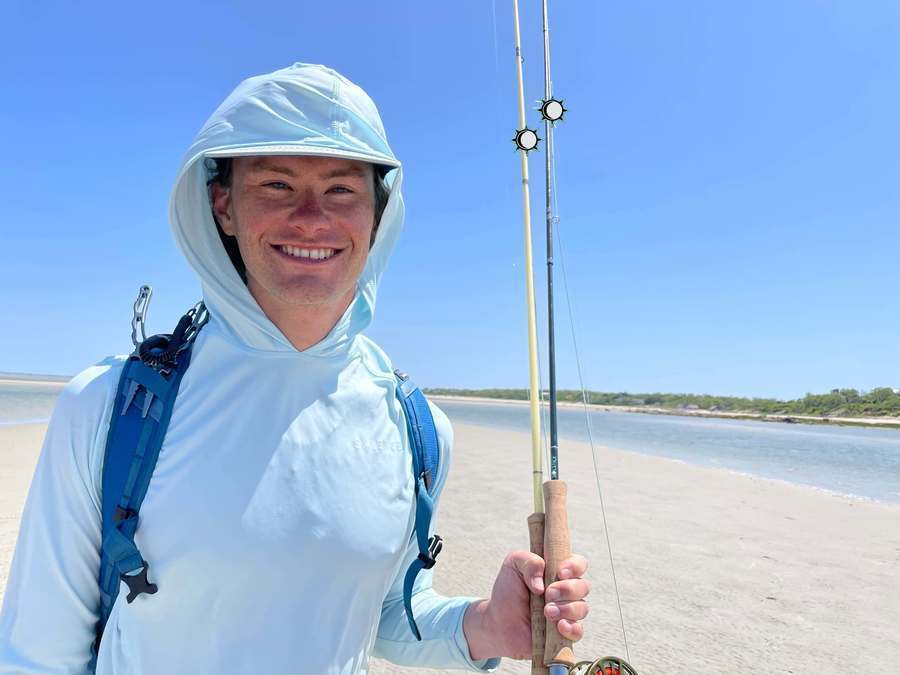
What LaCroix built on Cape Cod is not a typical charter operation, and he tells every client so. His specialty is sight fishing for striped bass in shallow water, spotting individual fish on the flats and using hand-built rods modeled on traditional actions. "Think of it no different than walking through the woods with a bow and arrow," he says. "It makes it much harder on the angler, but also gives those fish a fighting chance. It levels the playing field—a small act of conservation."
Visit his website and you will notice something missing. There are no pictures of fish, anywhere. "It's really about that experience and that connection that you make with the environment around you. I'm not going out there trying to catch a million fish." Some mornings he calls clients before dawn and suggests breakfast instead, either because the curated approach and ultimate desire to sight fish isn’t possible or the conditions would stress the stripers.
There is urgency behind the philosophy. The striped bass population, he says, has seen six consecutive years of unsuccessful spawns, and a striper takes eight years to reach spawning maturity. The ocean off Cape Cod has warmed so much that he no longer guides in August. The water is simply too hot for the fish.
"I feel like I'm out there as an activist," he says. "Getting people connected, getting more people involved in knowing what's going on, is the conservation work that I'm doing."
Connected to the Craft
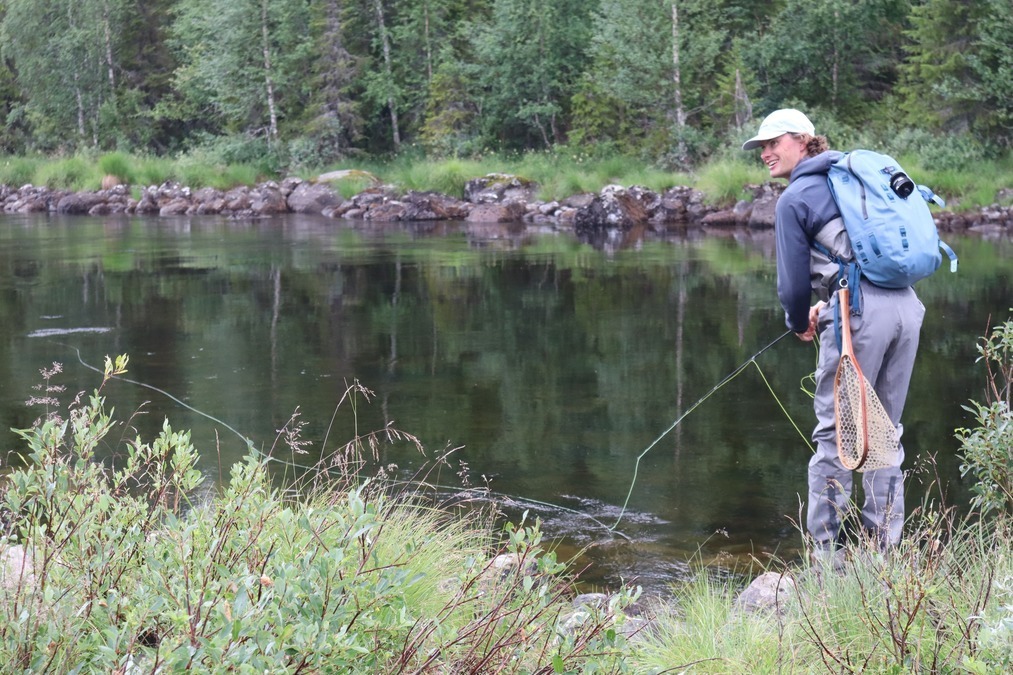
Guiding is only one of the hats LaCroix wears. He has immersed himself in every corner of the craft, building his own fly rods, product testing, and founding a global citizen science nonprofit focused on ecology. All of these efforts are centered on conservation and a deep connection with the environment.
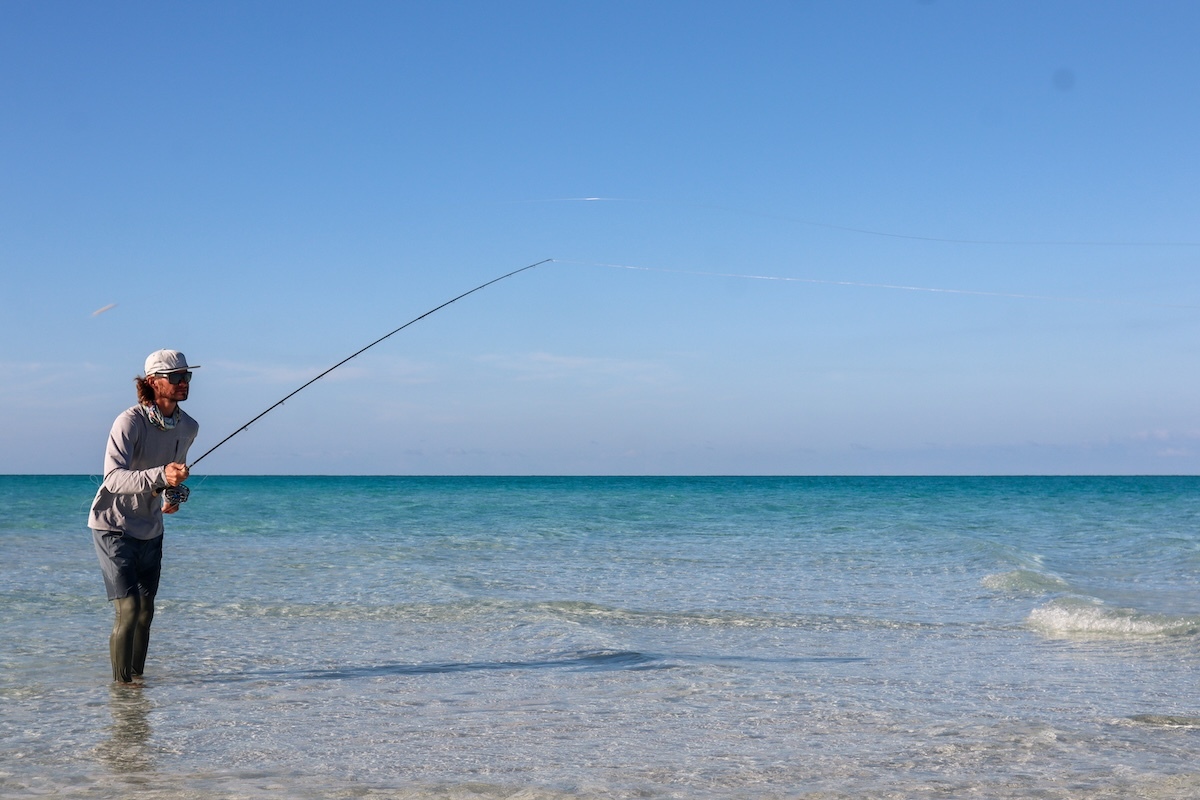
The work has taken him around the world. For the past three years, LaCroix and his wife, Michelle, have managed a fly fishing lodge on Great Harbour Cay in the Berry Islands, a strip of land a mile wide and seven miles long with 450 residents, where the motto is “Community first.” He recently stepped up to general manager, a more remote role that frees up time for other projects. Among them are deeper involvement with various nonprofit organizations, and an expansion of his guiding ventures to Michelle's native country, Switzerland.
The physical side of the craft is growing, too. Kevin works with Patagonia on product testing, helping shape sustainable, forward-thinking, and long-lasting designs. This past summer, LaCroix partnered with a traditional Cape Cod boat builder to construct a flats boat out of wood, reviving what he calls a lost art in an era when flats boats "have become way over-designed."
A young film producer was so taken with the story that he signed on to document the build as a personal project, full crew and all, with an eye toward the fly fishing and film festival circuit. For LaCroix, it is the whole philosophy in one vessel: old craft, light touch, the connection mattering more than the technology.
The Boarding School Connection
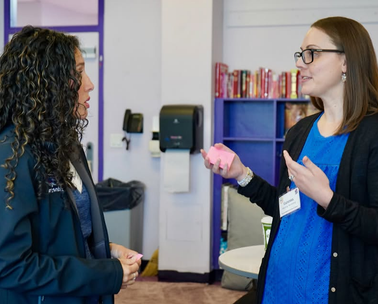
During one of LaCroix’s final full-time months in the small island lodge in the Bahamas, a guest walked in, creating a moment that felt wholly surreal. It turned out to be a Brewster alum, Class of 2020, carrying the very worry LaCroix once carried. He loved the outdoors and did not love the career path he had chosen. They sat down together over a couple of evenings, with LaCroix offering mentorship from his lived experience. “Let's get creative. Let's think about your skills in relation to the outdoor industry.”
"It was just so surreal to have an alum show up," LaCroix says. "I freaked out."
It may be the most LaCroix story possible. The Brewster network reaching him through the water, the way everything important in his life seems to arrive. This November he returns to campus to speak to Brewster’s current students, hoping to give them advice that helped him in his journey.
"Continue to accept nothing less than what your passion is, and if you don't know your passions yet, it's okay. That will come. The more you're able to tune into yourself, the more you're going to be successful in life."
He pauses, and lands on the school's own language without seeming to notice.
"I love Brewster's mission. Living a life of passion and purpose, thinking creatively, doing it. It's the nail on the head."
___
This story is featured in the Fall 2026 edition of Brewster, The Magazine. Read more stories, explore campus news, and catch up with the Brewster community in the full issue.